Malasaña or Chueca: two neighbourhood walks, different stories

The short answer
Choose Malasaña for the story around Dos de Mayo and the area’s alternative cultural associations; choose Chueca for LGBTQ+ visibility, public plazas and Mercado de San Antón. Both reward a walk beyond their evening reputations. They are close enough to connect, but giving each a clear focus is more useful than declaring one the better neighbourhood.
Which one to choose
Choose Plaza del Dos de Mayo if
- You want to begin with the historical memory of Plaza del Dos de Mayo
- You are interested in the Movida and changing street culture
- You prefer an outing built around smaller streets and a city-history museum
Choose Plaza de Chueca if
- You want to understand Madrid’s LGBTQ+ visibility through public places
- You would like to connect plazas with the Mercado de San Antón
- You want a walk that follows Chueca, Pedro Zerolo and the connecting streets
What these conditions rest on
Each condition is our editorial reading of the two place guides. The map provides geographic context and straight-line distances, not verified walking routes. Check current access details with the linked sources.
Plaza del Dos de Mayo: full conditions
- You want to begin with the historical memory of Plaza del Dos de Mayo
- You are interested in the Movida and changing street culture
- You prefer an outing built around smaller streets and a city-history museum
Plaza de Chueca: full conditions
- You want to understand Madrid’s LGBTQ+ visibility through public places
- You would like to connect plazas with the Mercado de San Antón
- You want a walk that follows Chueca, Pedro Zerolo and the connecting streets
At a glance
| What is counted | Plaza del Dos de Mayo | Plaza de Chueca |
|---|---|---|
| Nearest sight (straight-line distance) | 2 mArco de Monteleón | 2 mPlaza de Chueca |
Map observations from OpenStreetMap, each side read from its own anchor point; coverage may be incomplete.
How to read these numbers
- Distances are straight lines, not walking routes.
- Anchors: Plaza del Dos de Mayo is read from Plaza del Dos de Mayo; Plaza de Chueca from Plaza de Chueca.
What changes between them
| What changes | Plaza del Dos de Mayo | Plaza de Chueca |
|---|---|---|
| Historical thread | Dos de Mayo, the remembered uprising and the later Movida | LGBTQ+ visibility and the transformation of public neighbourhood life |
| Starting point | Plaza del Dos de Mayo or the History Museum at Fuencarral | Plaza de Chueca, then Augusto Figueroa and the market |
| Public spaces | Dos de Mayo and the smaller streets around it | Plaza de Chueca and Plaza de Pedro Zerolo |
| Cultural pause | A museum-led look at Madrid’s own history | A market stop or a specific cultural event chosen from current listings |
| Connecting the walks | Use Fuencarral as a point of orientation before crossing towards Chueca | Return towards Fuencarral if continuing into Malasaña |
Different stories, not competing identities
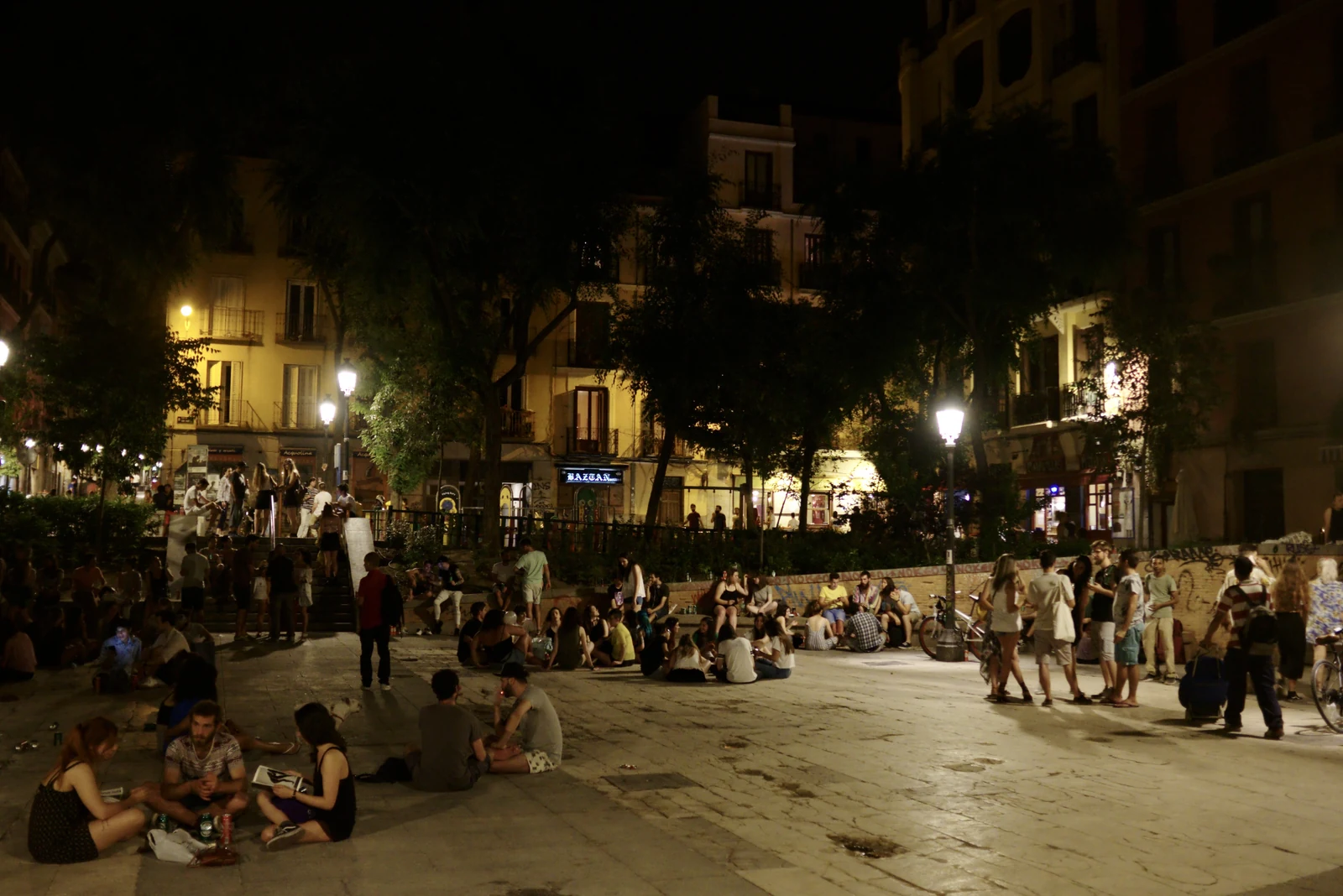
Malasaña’s public memory centres on the uprising commemorated at Dos de Mayo and its later association with the Movida. Chueca’s modern identity is closely linked to the visibility of LGBTQ+ people and businesses. Those are useful starting themes, not exhaustive descriptions of everyone living there. Avoid turning either area into a stereotype: both contain ordinary residential streets, work, shopping and cultural life alongside the histories that draw visitors.
Choose a starting square and a purpose
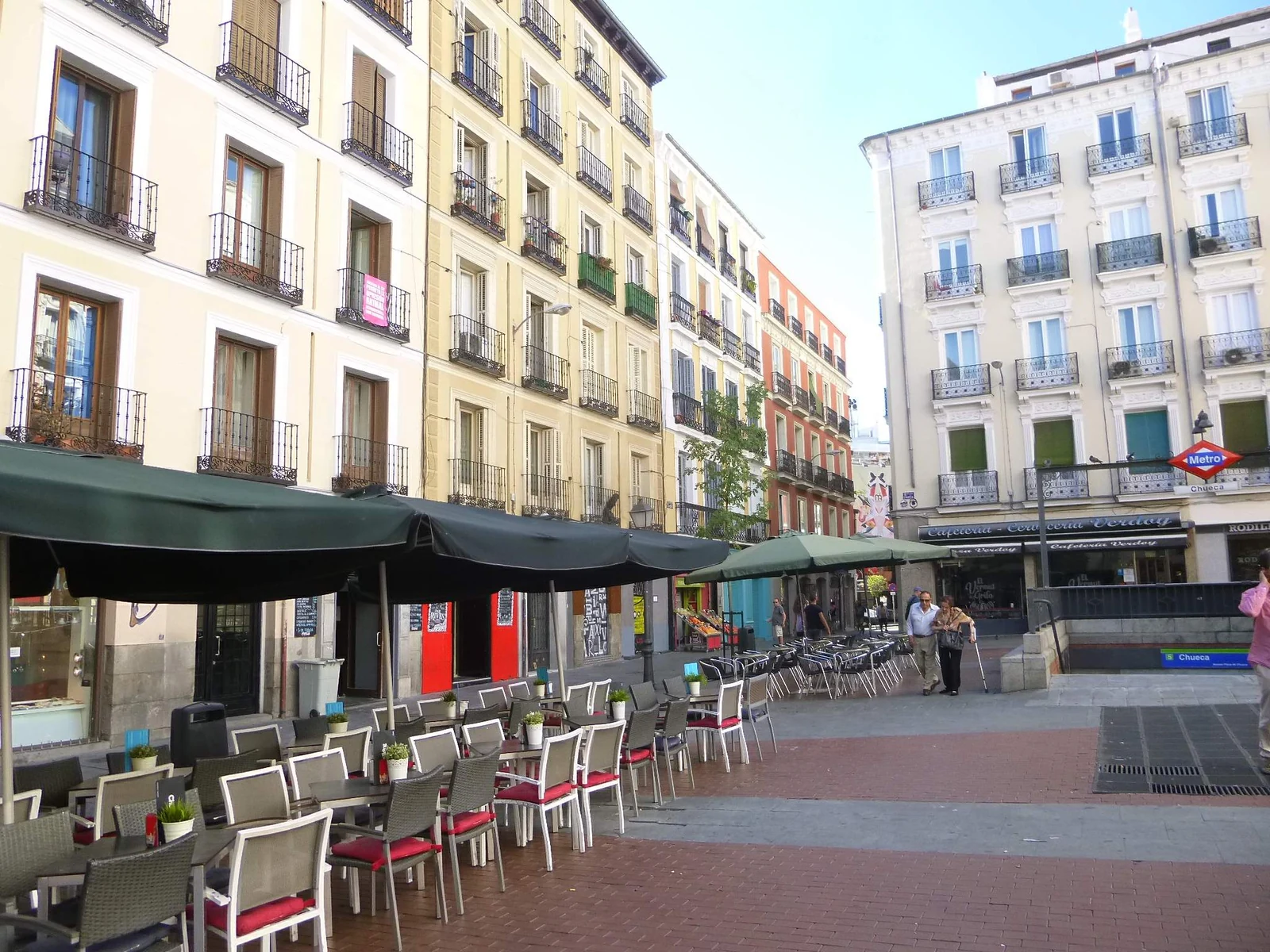
For Malasaña, begin with the arch and monument at Dos de Mayo, then follow the smaller streets towards Fuencarral. For Chueca, start in the namesake square and connect the market with Plaza de Pedro Zerolo. These routes give each visit a structure without pretending that every street has the same character. Pick the place whose story interests you first, rather than comparing the areas through venue totals or a ranking of nightlife intensity.
Use daytime to see more than entertainment
A daytime walk gives you time to look at façades, public names, storefronts and the way squares are used. The History Museum can give Malasaña a structured cultural stop, while Mercado de San Antón offers a different pause on a Chueca route. Neither visit requires an evening out. If a performance or event is important, check its own programme and let that specific activity determine the later part of the day.
Connect them without flattening the differences
Fuencarral makes a useful line of orientation between the two visitor areas. You can move from one to the other, but stop and change the focus of the walk rather than treating the whole outing as a continuous shopping strip. A single well-observed neighbourhood is preferable to a rushed double circuit. If you combine both, leave room to sit, revisit a square or drop an indoor stop rather than trying to complete every suggestion.
On the map
Questions and answers
Which neighbourhood should I visit first?
Choose Malasaña for Dos de Mayo and alternative cultural history, or Chueca for LGBTQ+ public identity and a plaza-and-market walk.
Can I combine Malasaña and Chueca?
Yes. Use Fuencarral to orient the connection, but give each area its own focus instead of treating them as one undifferentiated route.
Do I need to go out at night to understand them?
No. Their squares, shops, architecture and cultural histories make daytime visits worthwhile; an evening event is a separate optional choice.


