MálagaLandmark stay
Málaga’s Alcazaba: a fortress-palace above the Roman theatre

The short answer
The Alcazaba is Málaga’s Islamic fortress-palace on the slope above the Roman theatre. Its interest lies in the contrast between defensive circulation and sheltered palace spaces, as much as in views across the city. Treat the theatre, Alcazaba and higher Gibralfaro as related but separate places when deciding the shape of your visit.
Who it suits, who should skip it
Good for
- Visitors interested in defensive architecture, courtyard spaces and the layering of Málaga’s history
- Walkers who want to connect Calle Alcazabilla, the Roman theatre and the Alcazaba
- Travellers who prefer understanding a place to completing a list of photo stops
Skip it if
- Reconsider if your plan depends on assuming Gibralfaro is part of a continuous interior route
- Choose a shorter visit if you cannot allow time for the main subject and its surroundings
- Check individual access first if steps, slopes or a particular interior would determine your visit
A fortified palace overlooking Málaga
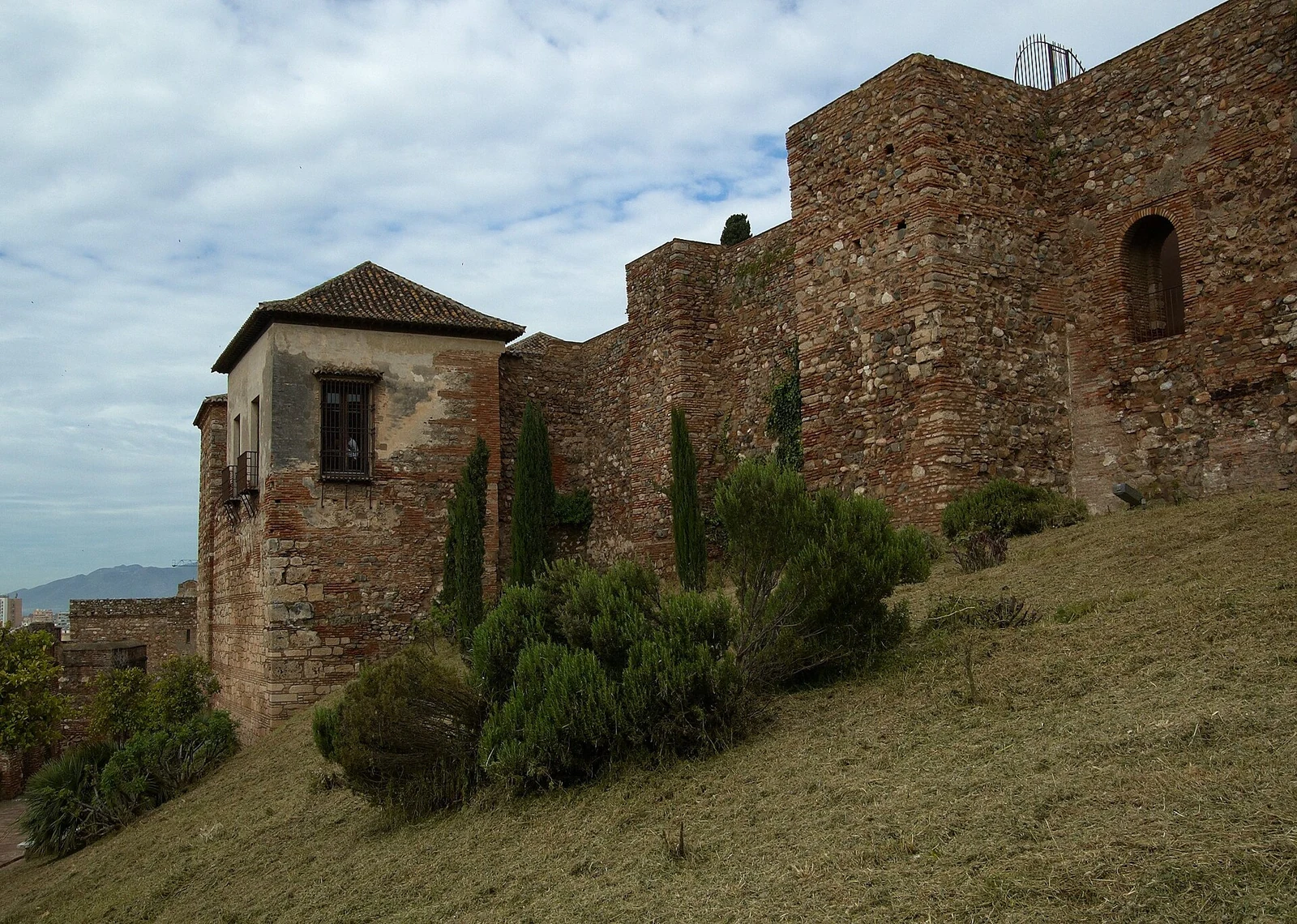
The Alcazaba combines the needs of fortification with those of a palace. Its hillside position explains the relationship between the city below and the protected spaces above. Look at the route itself as part of the architecture: changes of direction, successive enclosures and thresholds help explain why this is more than a scenic garden or an isolated tower overlooking the historic centre.
Gateways and courtyards tell different stories
The defensive walls establish one architectural language, while the inner courtyards introduce another. Water, planting and sheltered spaces alter the experience of moving through the complex. Rather than expecting an uninterrupted climb to a single summit, follow the contrast between outer defences and the more intimate palace areas. This distinction gives the monument a coherent story even if a particular view is not the main attraction.
Begin with the Roman theatre setting
Begin by understanding the setting around Calle Alcazabilla and the Roman theatre at the foot of the hill. Seeing the theatre before entering the Alcazaba places different periods of Málaga’s history beside each other. After the fortress visit, return to the historic streets for a separate walk towards the cathedral or Picasso Museum, instead of automatically adding every attraction visible from the hillside.
Do not confuse the Alcazaba with Gibralfaro
Gibralfaro is a separate castle higher on the hill, not simply another room in the Alcazaba. Verify the current entrance, route, accessibility and admission arrangements for each monument if combining them. The hill and the interior circulation can be significant parts of the outing; a short map distance does not establish an easy connection. Consult official visitor information before choosing an approach that depends on lifts or step-free access.
Where it is
The area this guide covers: This guide covers Calle Alcazabilla, the Roman theatre and the Alcazaba. The route is an editorial selection of public places, not a formal district boundary or a surveyed accessibility itinerary. An editorial outline, not an official district line.
Nearby
Mapped sights nearby
- Alcazaba de Málaga
- Teatro Romano
- Edificio del Banco de España
- Placa a la Unión de los Reyes Católicos
- Monumento a Juan Temboury Álvarez
- Estela a Ángeles Rubio Argüelles
- Monumento a Vicente Aleixandre
- Yacimiento Arqueológico del Rectorado de la Universidad de Málaga
More street guides nearby
How these numbers were measured
| Sampled point | Elevation |
|---|---|
| Alcazaba de MálagaThe anchor: distances on this page start here | 19 m |
| North ring sample | 25 m |
| North-east ring sample | 87 m |
| East ring sample | 32 m |
| South-east ring sample | 7 m |
| South ring sample | 0 m |
| South-west ring sample | 15 m |
| West ring sample | 21 m |
| North-west ring sample | 24 m |
- Mapped venue counts do not measure noise. Noise-risk ratings, formula-based walking times and unverified transit classifications are not shown.
- Distances are straight lines from the guide anchor, not walking routes or journey times.
- Elevations from Copernicus DEM GLO-90 via the Open-Meteo Elevation API are sampled ground heights, not route ascent. Terrain models have limited resolution.
- Map observations recorded on 14 Oct 2026. Map coverage may be incomplete.
Questions and answers
What is the main reason to visit Alcazaba de Málaga?
The main interest is defensive architecture, courtyard spaces and the layering of Málaga’s history. Use the guide’s suggested sequence to connect the individual sights, but leave time to examine the main place rather than treating it only as a stop on the way elsewhere.
What can I combine with this visit?
A useful starting sequence connects Calle Alcazabilla, the Roman theatre and the Alcazaba. These are suggested links rather than a timed tour. Choose the parts that fit your interests, and check admission separately for any interior you want to enter.
What should I check before setting out?
Avoid assuming Gibralfaro is part of a continuous interior route. Check current official information for any controlled interior or essential facility. The street route and an interior visit are different experiences, and the suggested walk is not an accessibility certification.


