BarcelonaStreet
Passeig de Gràcia: reading Barcelona’s modernista boulevard

The short answer
Passeig de Gràcia is an architectural walk as much as a distinctive avenue. Casa Batlló and La Pedrera are major draws, but neighbouring buildings make the boulevard more interesting than a Gaudí-only itinerary. Compare façades from across the street, look at their relationship to the wider Eixample and choose interior visits for depth rather than quantity.
Who it suits, who should skip it
Good for
- Comparing modernista buildings by different architects
- An outdoor architecture walk with optional interiors
- Understanding how landmark houses sit on a major boulevard
Skip it if
- A route focused on Roman and medieval Barcelona
- Expecting every notable façade to be by Gaudí
- An itinerary that requires visiting every interior
An avenue built to be seen
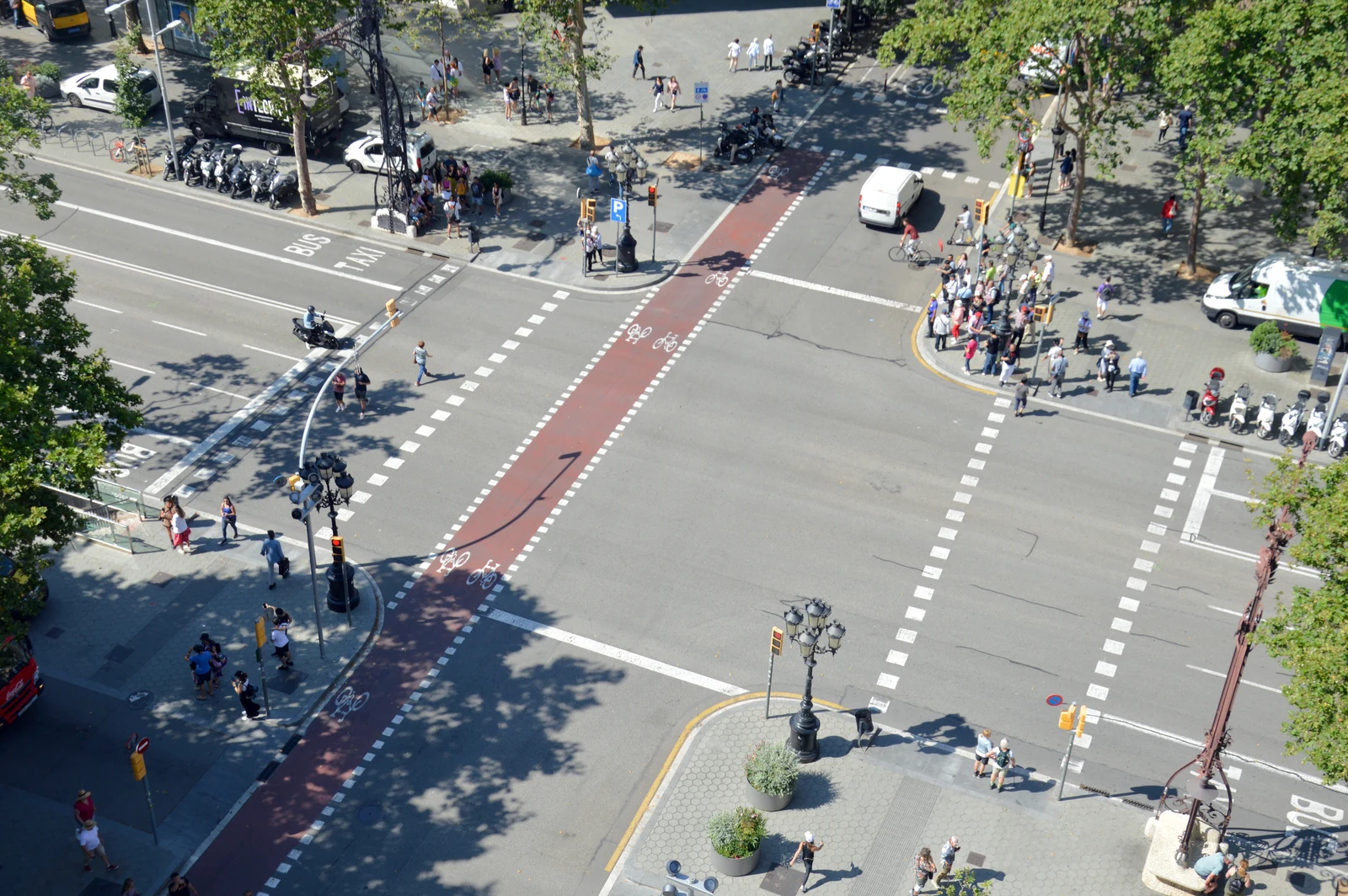
Passeig de Gràcia links the city centre with Gràcia and became a stage for architectural display. The scale of the avenue matters: step back where the pavement and crossings allow, and compare a whole façade before moving closer to its ornament. A building seen only from its doorway can be hard to understand. The boulevard is therefore both a collection of individual works and a setting that encourages comparison between them.
Look at the neighbours of Casa Batlló
Casa Batlló shares its architectural context with Casa Amatller and Casa Lleó Morera, associated with Puig i Cadafalch and Domènech i Montaner respectively. This is a good place to resist treating modernisme as a single visual formula. Compare how the façades handle balconies, windows and the skyline, then ask which details distinguish each building. You can make those comparisons outdoors; seeing an interior adds another layer but is not required to notice the conversation between neighbouring designs.
Continue towards La Pedrera
Use the Casa Batlló group as one main stop and La Pedrera as another, leaving space between them to look at the avenue itself. Continue towards Diagonal if you want to understand how the boulevard meets the next major part of the city. For a return walk, choose a nearby parallel street rather than duplicating the whole route. That change makes the monumental frontage easier to compare with the surrounding Eixample blocks and their more everyday scale.
Pick an interior for a clear reason
An interior visit can focus on an architect, a domestic space or the relationship between structure and ornament. Decide which question interests you before adding several separate attractions. Consult the building’s official visitor information for current access, rather than assuming that every entrance offers the same kind of visit. An exterior walk should still have its own purpose: observing façades carefully, crossing only at appropriate points and noticing the buildings that sit between the prominent names.
Where it is
The area this guide covers: The guide follows Passeig de Gràcia from the Plaça de Catalunya end towards Diagonal, concentrating on its modernista buildings and brief connections with adjacent Eixample streets. An editorial outline, not an official district line.
Nearby
Mapped sights nearby
- Casa Milà
- Torre Muñoz
- Palau del Baró de Quadras
- Palau Robert
- Plaça del Cinc d'Oros
- Casa Comalat
- La Casa Comalat
More street guides nearby
- Plaça de la Vila de Gràcia
- la Dreta de l'Eixample
- Carrer del Consell de Cent
- Plaça de Catalunya
- Sagrada Família
- el Barri Gòtic
Compare and read on
How these numbers were measured
| Sampled point | Elevation |
|---|---|
| Passeig de GràciaThe anchor: distances on this page start here | 51 m |
| North ring sample | 59 m |
| North-east ring sample | 51 m |
| East ring sample | 46 m |
| South-east ring sample | 46 m |
| South ring sample | 48 m |
| South-west ring sample | 54 m |
| West ring sample | 65 m |
| North-west ring sample | 66 m |
- Mapped venue counts do not measure noise. Noise-risk ratings, formula-based walking times and unverified transit classifications are not shown.
- Distances are straight lines from the guide anchor, not walking routes or journey times.
- Elevations from Copernicus DEM GLO-90 via the Open-Meteo Elevation API are sampled ground heights, not route ascent. Terrain models have limited resolution.
- Map observations recorded on 13 Oct 2026. Map coverage may be incomplete.
Questions and answers
Is Passeig de Gràcia only a Gaudí route?
No. The avenue also features major works associated with Puig i Cadafalch and Domènech i Montaner, making comparisons between architects especially useful.
Which buildings form a good starting group?
Casa Batlló, Casa Amatller and Casa Lleó Morera provide neighbouring façades to compare before continuing along the boulevard towards La Pedrera.
Can I enjoy the architecture without entering?
Yes. The street setting and façades support a substantial outdoor walk; treat any interior as a separate visit with its own current access arrangements.


